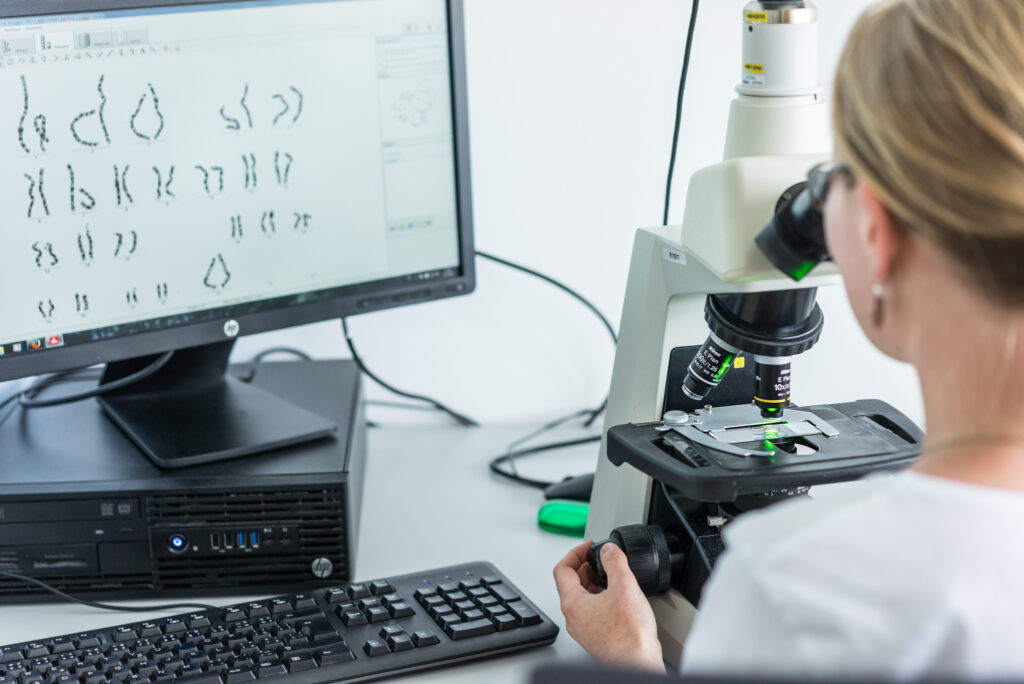


When a couple struggles to conceive, attention usually focuses on age, hormonal balance, or lifestyle factors. Yet there is an area that often remains overlooked – genetics. In fact, genetic variations are among the most common causes of infertility and recurrent miscarriages.
The tricky part is that genetic factors often show no outward signs. A couple may appear completely healthy, with standard tests within normal limits, yet conception may fail or pregnancies end in early loss.
The Hidden Role of Genetics in Conception and Pregnancy
Genetic variations can affect both fertilization and embryo development. They often only become apparent after repeated unsuccessful attempts to conceive or in cases of recurrent pregnancy loss.
At Repromeda, every couple undergoes a fundamental genetic test called karyotyping – an analysis of chromosomal makeup, explains Mgr. David Kubíček, Ph.D., Director of the Repromeda Genetic Laboratory.
This test is performed using a simple blood sample and can detect abnormalities in chromosome number or structure that may significantly impact fertility and pregnancy outcomes. Based on the results, targeted next steps can be planned to prevent repeated unexplained failures.
Preconception Genetic Testing: When Standard Exams Are Not Enough
In addition to karyotyping, advanced genetic tests can reveal less obvious causes of fertility issues. One example is the preconception PANDA genetic test, developed at Repromeda.
Individuals can also undergo the PANDA test even before having a partner. If no carrier status is detected, testing the future partner may not be necessary. However, if a risk is identified, testing both partners is recommended to assess genetic compatibility and provide key insights into the health of a future child, explains MUDr. Kateřina Veselá, Ph.D.
To illustrate, last year nearly 800 PANDA tests were performed, and about 6,5 % of couples were carriers of a mutation in the same gene.
A single blood test can identify carrier status for over 100 serious inherited diseases, including cystic fibrosis, spinal muscular atrophy, and certain forms of congenital deafness. It also provides answers for couples who have been trying to conceive for a long time while other tests show normal results.
Every individual can unknowingly carry a genetic mutation. The risk arises when both partners carry the same mutation – a scenario where genetics can play a decisive role.
What to Do If a Genetic Risk Is Found
Discovering a genetic risk does not mean the end of hopes for having a child. Modern assisted reproduction offers solutions, such as IVF combined with preimplantation genetic testing (PGT).
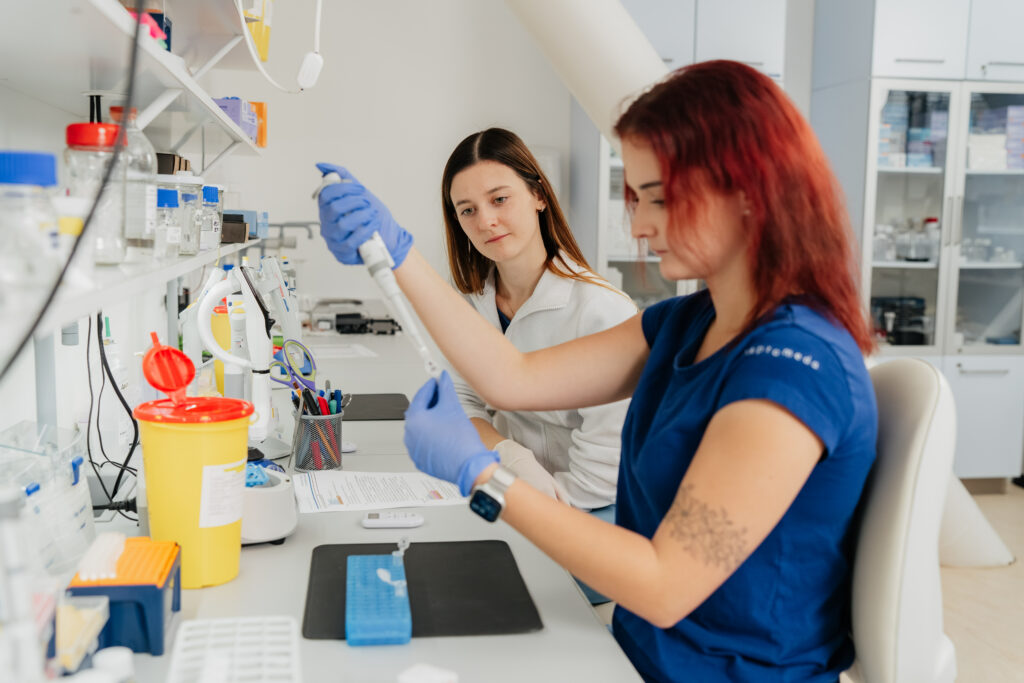
This testing analyzes the genetic information of embryos before transfer to the uterus. Only embryos without genetic abnormalities are selected, which significantly reduces the risk of miscarriage and increases the chances of a healthy baby.
At Repromeda, genetic testing is considered a cornerstone of initial diagnostics, not a last resort. Knowing the genetic makeup of both partners allows for targeted testing, tailored treatment, and a clear path toward parenthood.
Frequently Asked Questions (FAQ)
Genetic testing is particularly relevant for couples struggling to conceive, experiencing recurrent miscarriages, or when no other clear cause of infertility is found. At Repromeda, genetics is part of the initial evaluation because it can significantly guide further treatment.
Yes. Many genetic variations show no outward signs and may remain unknown throughout life. Yet they can affect conception or embryo development, especially if the same mutation is present in both partners.
Karyotyp je vyšetření chromozomální výbavy člověka. Provádí se z krve a dokáže odhalit poruchy počtu nebo struktury chromozomů, které mohou stát za neplodností nebo opakovanými potraty. Vyšetření obou partnerů umožňuje správně zacílit další léčbu.
Karyotyping looks at chromosomes as a whole. The PANDA test is an advanced preconception genetic analysis that identifies carriers of specific inherited diseases at the gene level. Both tests complement each other.
No. A genetic finding does not end the journey to parenthood. On the contrary, it allows for a safer, targeted approach, such as IVF with preimplantation genetic testing (PGT), which can significantly reduce miscarriage risk and increase the chance of a healthy baby.
Yes. Preconception genetic testing can identify potential risks before pregnancy, allowing couples to take proactive steps and avoid unnecessary failed attempts or uncertainty.
The PANDA test is suitable not only for couples struggling to conceive or with a history of recurrent miscarriages, but also for anyone who wants to gain insight into their genetic and reproductive health before planning a family. Early testing can uncover hidden genetic risks, provide peace of mind, and guide informed decisions – even if you are not yet planning to have a child.