


What Is Ovarian Reserve and What Role Does It Play in Fertility?
Blog

What Is Ovarian Reserve and What Role Does It Play in Fertility?

Žena podstupující vyšetření Femme Test v ordinaci reprodukční kliniky

Ovarian reserve is one of the most important indicators of female fertility. It determines how many eggs a woman has in her ovaries. This parameter naturally decreases over time, which is why it plays a crucial role in assessing the chances of becoming pregnant, both naturally and with the help of assisted reproduction.

In this article, you will learn what ovarian reserve means, how it is measured, what AMH levels correspond to different age groups, and when it is advisable to pay closer attention.

What is ovarian reserve?

Ovarian reserve refers to the number of eggs a woman has in her ovaries at a given point in life. Every woman is born with a finite number of eggs, and no new eggs are produced over time – this supply only gradually declines.

Ovarian reserve helps determine:

  • the approximate number of eggs remaining in the ovaries,
  • the likelihood of becoming pregnant over time,
  • how the body may respond to hormonal stimulation during IVF.

It is important to know that even women with a regular menstrual cycle may have a reduced ovarian reserve.

Number of eggs in the ovaries and how it changes over a lifetime

The number of eggs changes from birth through menopause. The values below are approximate and may vary depending on the laboratory and testing method. Proper interpretation should always be discussed with a specialist.

Approximate number of eggs at different life stages:

Life stageEstimated ovarian egg count
At birthapprox. 1–2 million eggs
At pubertyapprox. 300,000–500,000 eggs
At age 30on average 10,000–12,000 eggs
At age 40fewer than 3,000 eggs

How is ovarian reserve measured?

The most reliable indicator is the level of AMH – Anti-Müllerian Hormone.

Žena podstupující vyšetření Femme Test v ordinaci reprodukční kliniky

Average AMH values by age

The lower the AMH level, the smaller the number of eggs in the ovaries and the faster fertility may decline.

The table below shows approximate average AMH values by age group. Individual values may vary, so results should always be interpreted in the context of overall health and other hormonal findings. Reference ranges may also differ depending on the laboratory and testing method used. AMH alone does not determine whether you can become pregnant.

Woman’s ageAverage AMH level (ng/ml)
20–24 years4.1–6.8
25–29 years3.0–5.4
30–34 years2,1–4,2
35–39 years1,1–2,5
40–44 years0,2–1,0

If your AMH level is significantly lower than expected for your age, it is advisable to consult a specialist – whether you are planning pregnancy now or in the future.

Reduced ovarian reserve

Reduced ovarian reserve means that a woman has fewer eggs than would be expected for her age. This condition often has no obvious symptoms and is frequently discovered only when pregnancy does not occur or during preventive fertility testing.

It is also important to understand that reduced ovarian reserve does not say anything about egg quality. Egg quality can still be very good, especially in younger women.

Why can ovarian reserve decline faster than usual?

There are several possible causes of reduced ovarian reserve, most commonly:

  • genetic factors,
  • autoimmune disorders,
  • endometriosis,
  • ovarian surgery,
  • chemotherapy or radiotherapy,
  • untreated infections,
  • accelerated age-related decline.

Premature ovarian insufficiency

Premature ovarian insufficiency (POI) means that ovarian reserve declines to a minimal level before the age of 40.

Symptoms of POI may include

  • irregular menstruation,
  • ovulation problems,
  • difficulty becoming pregnant.

Risk factors include

  • genetic predisposition,
  • cancer treatment,
  • autoimmune diseases,
  • smoking,
  • surgical procedures.

How can low ovarian reserve be addressed?

A diagnosis of low ovarian reserve can understandably cause concern. However, it is important to know that AMH is not the only factor influencing fertility, and low AMH does not mean pregnancy is impossible. Modern reproductive medicine offers several effective options that allow women with lower reserve to conceive successfully.

Egg quality can still be very good even with low AMH, and there are effective ways to significantly support the chances of pregnancy.

1. Assisted reproduction (IVF)

If AMH levels are very low and natural conception has not been successful, assisted reproduction (IVF) may be the most effective path to pregnancy. In women with reduced ovarian reserve, only a small number of eggs often mature, which makes choosing the right treatment strategy essential.

Explore methods that can significantly increase the success of infertility treatment.

2. IVF using donor eggs

If ovarian reserve is extremely low (for example, AMH below 0.3 ng/ml) or in cases of premature ovarian insufficiency, IVF with donor eggs may be the most suitable option.

This method offers a very high chance of pregnancy, even when the ovaries no longer respond to stimulation or when the quality of a woman’s own eggs is significantly reduced. It is often recommended for women over 40, women with genetic risks, or those whose previous IVF cycles with their own eggs did not result in viable embryos.

Repromeda offers a well-established anonymous donor program:
– donors are carefully selected based on health criteria, genetics, and compatibility,
– waiting times for treatment are minimal,
– success rates are very high, as eggs come from young and healthy donors.

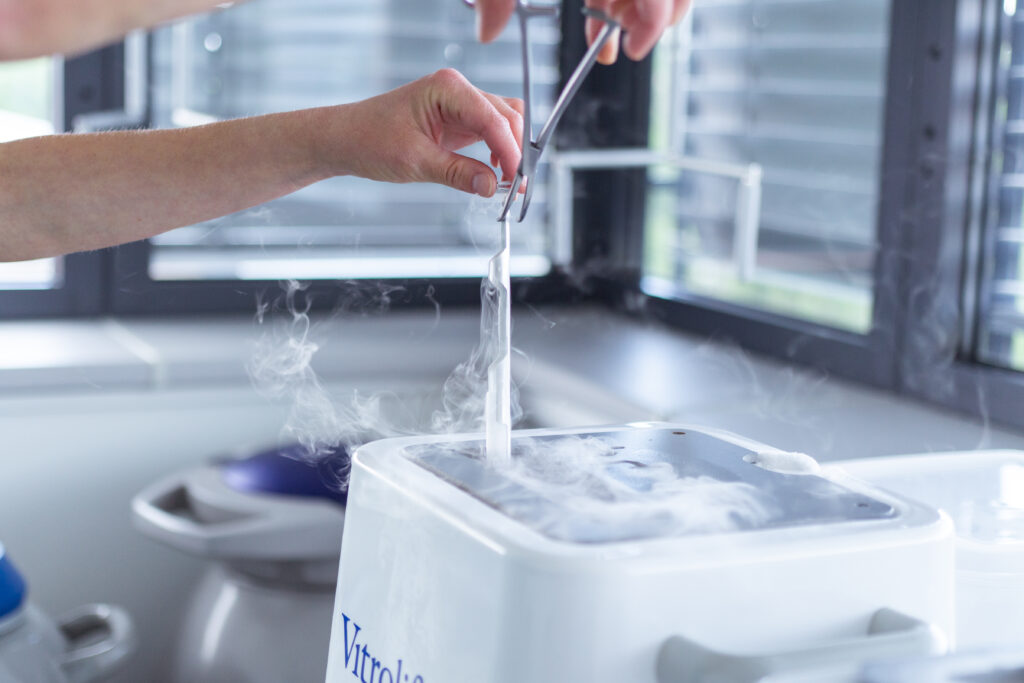
3. Social freezing – preventive egg freezing

If a woman is not yet ready to have a child but wants reassurance for the future, modern medicine offers an effective solution: preventive egg freezing.

Frozen eggs do not age, meaning a woman can use eggs of the same quality she had at the time of retrieval.

Social freezing is especially suitable:

  • if AMH is lower than expected for age,
  • if you plan to postpone pregnancy for several years,
  • in cases of endometriosis, which may reduce egg quantity and quality,
  • before planned oncological treatment,
  • or if you want greater control over your reproductive future.

Ideally, eggs are frozen before the age of 30, but the procedure can still be beneficial later – especially when hormonal profiles or ultrasound findings suggest a faster decline in ovarian reserve.

Sources

Expert article available in the PubMed database

Frequently asked questions

1. What is ovarian reserve and why is it important?

Ovarian reserve is essentially the “egg supply” in the ovaries at a given time. It helps estimate how fertility may change over time and how the ovaries may respond to hormonal stimulation (for example, during IVF). It does not, however, provide a complete picture of fertility and must always be evaluated alongside other factors.

2. What is the difference between ovarian reserve and egg quality?

Ovarian reserve mainly describes the quantity of eggs. Egg quality is strongly related to age and affects both the chance of pregnancy and the risk of genetic abnormalities. A woman may have lower reserve but still good egg quality, or vice versa.

3. What is AMH and why is it used to measure ovarian reserve?

AMH (Anti-Müllerian Hormone) is produced by cells of small follicles in the ovaries. Its blood level is one of the most reliable indicators of ovarian reserve and is commonly part of an initial fertility assessment.

4. When does it make sense to have AMH tested?

AMH testing is useful at any age, especially if:

  • pregnancy has not occurred (in women over 35 often after 6 months of trying),
  • you have an irregular cycle or missed periods,
  • you plan to postpone pregnancy,
  • you have endometriosis or a history of ovarian surgery,
  • there is a family history of early menopause,
  • you have undergone cancer treatment.

5. Can AMH be measured at any point in the cycle?

In most cases, yes. AMH levels are relatively stable and less dependent on the cycle day than other hormones. Still, it is best to follow your doctor’s or laboratory’s recommendations.

6. What are “normal” AMH values and when is AMH considered low?

“Normal” AMH values vary by age, laboratory, and testing method. Lower AMH generally suggests lower ovarian reserve. Interpretation should always consider age, ultrasound findings (AFC), and other results.

7. Can I have a regular cycle and still have low ovarian reserve?

Yes. Regular menstruation does not automatically mean good ovarian reserve. Some women ovulate regularly despite reduced reserve, which may only be detected through testing.

8. Does low AMH mean I cannot conceive naturally?

Not necessarily. Low AMH indicates a smaller egg supply and may suggest acting sooner, but natural conception depends on many factors. An individualized consultation with a specialist is essential.

9. Can ovarian reserve be increased?

Ovarian reserve cannot be biologically restored. Treatment focuses on supporting fertility through timing, treating underlying conditions, assisted reproduction, or preventive egg freezing.

10. What is premature ovarian insufficiency (POI) and how is it different from reduced reserve?

Reduced ovarian reserve means fewer eggs than expected for age, often with a regular cycle. POI involves a significant decline in ovarian function before age 40, frequently with irregular cycles, ovulation failure, and a markedly reduced chance of spontaneous pregnancy. Diagnosis is always made by a physician based on symptoms and laboratory findings.

11. What other tests are used to assess ovarian reserve besides AMH?

 Commonly used assessments include:

  • ultrasound evaluation of antral follicle count (AFC),
  • hormonal profile (e.g., FSH and estradiol in context),
  • overall medical history and clinical findings.

12. When is social freezing (preventive egg freezing) appropriate?

If you know you will postpone pregnancy or have signs of faster reserve decline (low AMH for age, endometriosis, family history of early menopause), preventive egg freezing may help preserve future fertility. Suitability is always assessed individually.

Schedule a non-binding consultation with us

And take the first step on your baby journey. The doctor will discuss with you everything you are interested in and suggest the next steps.

Blog

What Is Ovarian Reserve and What Role Does It Play in Fertility?

Žena podstupující vyšetření Femme Test v ordinaci reprodukční kliniky

Ovarian reserve is one of the most important indicators of female fertility. It determines how many eggs a woman has in her ovaries. This parameter naturally decreases over time, which is why it plays a crucial role in assessing the chances of becoming pregnant, both naturally and with the help of assisted reproduction.

In this article, you will learn what ovarian reserve means, how it is measured, what AMH levels correspond to different age groups, and when it is advisable to pay closer attention.

What is ovarian reserve?

Ovarian reserve refers to the number of eggs a woman has in her ovaries at a given point in life. Every woman is born with a finite number of eggs, and no new eggs are produced over time – this supply only gradually declines.

Ovarian reserve helps determine:

  • the approximate number of eggs remaining in the ovaries,
  • the likelihood of becoming pregnant over time,
  • how the body may respond to hormonal stimulation during IVF.

It is important to know that even women with a regular menstrual cycle may have a reduced ovarian reserve.

Number of eggs in the ovaries and how it changes over a lifetime

The number of eggs changes from birth through menopause. The values below are approximate and may vary depending on the laboratory and testing method. Proper interpretation should always be discussed with a specialist.

Approximate number of eggs at different life stages:

Life stageEstimated ovarian egg count
At birthapprox. 1–2 million eggs
At pubertyapprox. 300,000–500,000 eggs
At age 30on average 10,000–12,000 eggs
At age 40fewer than 3,000 eggs

How is ovarian reserve measured?

The most reliable indicator is the level of AMH – Anti-Müllerian Hormone.

Žena podstupující vyšetření Femme Test v ordinaci reprodukční kliniky

Average AMH values by age

The lower the AMH level, the smaller the number of eggs in the ovaries and the faster fertility may decline.

The table below shows approximate average AMH values by age group. Individual values may vary, so results should always be interpreted in the context of overall health and other hormonal findings. Reference ranges may also differ depending on the laboratory and testing method used. AMH alone does not determine whether you can become pregnant.

Woman’s ageAverage AMH level (ng/ml)
20–24 years4.1–6.8
25–29 years3.0–5.4
30–34 years2,1–4,2
35–39 years1,1–2,5
40–44 years0,2–1,0

If your AMH level is significantly lower than expected for your age, it is advisable to consult a specialist – whether you are planning pregnancy now or in the future.

Reduced ovarian reserve

Reduced ovarian reserve means that a woman has fewer eggs than would be expected for her age. This condition often has no obvious symptoms and is frequently discovered only when pregnancy does not occur or during preventive fertility testing.

It is also important to understand that reduced ovarian reserve does not say anything about egg quality. Egg quality can still be very good, especially in younger women.

Why can ovarian reserve decline faster than usual?

There are several possible causes of reduced ovarian reserve, most commonly:

  • genetic factors,
  • autoimmune disorders,
  • endometriosis,
  • ovarian surgery,
  • chemotherapy or radiotherapy,
  • untreated infections,
  • accelerated age-related decline.

Premature ovarian insufficiency

Premature ovarian insufficiency (POI) means that ovarian reserve declines to a minimal level before the age of 40.

Symptoms of POI may include

  • irregular menstruation,
  • ovulation problems,
  • difficulty becoming pregnant.

Risk factors include

  • genetic predisposition,
  • cancer treatment,
  • autoimmune diseases,
  • smoking,
  • surgical procedures.

How can low ovarian reserve be addressed?

A diagnosis of low ovarian reserve can understandably cause concern. However, it is important to know that AMH is not the only factor influencing fertility, and low AMH does not mean pregnancy is impossible. Modern reproductive medicine offers several effective options that allow women with lower reserve to conceive successfully.

Egg quality can still be very good even with low AMH, and there are effective ways to significantly support the chances of pregnancy.

1. Assisted reproduction (IVF)

If AMH levels are very low and natural conception has not been successful, assisted reproduction (IVF) may be the most effective path to pregnancy. In women with reduced ovarian reserve, only a small number of eggs often mature, which makes choosing the right treatment strategy essential.

Explore methods that can significantly increase the success of infertility treatment.

2. IVF using donor eggs

If ovarian reserve is extremely low (for example, AMH below 0.3 ng/ml) or in cases of premature ovarian insufficiency, IVF with donor eggs may be the most suitable option.

This method offers a very high chance of pregnancy, even when the ovaries no longer respond to stimulation or when the quality of a woman’s own eggs is significantly reduced. It is often recommended for women over 40, women with genetic risks, or those whose previous IVF cycles with their own eggs did not result in viable embryos.

Repromeda offers a well-established anonymous donor program:
– donors are carefully selected based on health criteria, genetics, and compatibility,
– waiting times for treatment are minimal,
– success rates are very high, as eggs come from young and healthy donors.

3. Social freezing – preventive egg freezing

If a woman is not yet ready to have a child but wants reassurance for the future, modern medicine offers an effective solution: preventive egg freezing.

Frozen eggs do not age, meaning a woman can use eggs of the same quality she had at the time of retrieval.

Social freezing is especially suitable:

  • if AMH is lower than expected for age,
  • if you plan to postpone pregnancy for several years,
  • in cases of endometriosis, which may reduce egg quantity and quality,
  • before planned oncological treatment,
  • or if you want greater control over your reproductive future.

Ideally, eggs are frozen before the age of 30, but the procedure can still be beneficial later – especially when hormonal profiles or ultrasound findings suggest a faster decline in ovarian reserve.

Sources

Expert article available in the PubMed database

Frequently asked questions

1. What is ovarian reserve and why is it important?

Ovarian reserve is essentially the “egg supply” in the ovaries at a given time. It helps estimate how fertility may change over time and how the ovaries may respond to hormonal stimulation (for example, during IVF). It does not, however, provide a complete picture of fertility and must always be evaluated alongside other factors.

2. What is the difference between ovarian reserve and egg quality?

Ovarian reserve mainly describes the quantity of eggs. Egg quality is strongly related to age and affects both the chance of pregnancy and the risk of genetic abnormalities. A woman may have lower reserve but still good egg quality, or vice versa.

3. What is AMH and why is it used to measure ovarian reserve?

AMH (Anti-Müllerian Hormone) is produced by cells of small follicles in the ovaries. Its blood level is one of the most reliable indicators of ovarian reserve and is commonly part of an initial fertility assessment.

4. When does it make sense to have AMH tested?

AMH testing is useful at any age, especially if:

  • pregnancy has not occurred (in women over 35 often after 6 months of trying),
  • you have an irregular cycle or missed periods,
  • you plan to postpone pregnancy,
  • you have endometriosis or a history of ovarian surgery,
  • there is a family history of early menopause,
  • you have undergone cancer treatment.

5. Can AMH be measured at any point in the cycle?

In most cases, yes. AMH levels are relatively stable and less dependent on the cycle day than other hormones. Still, it is best to follow your doctor’s or laboratory’s recommendations.

6. What are “normal” AMH values and when is AMH considered low?

“Normal” AMH values vary by age, laboratory, and testing method. Lower AMH generally suggests lower ovarian reserve. Interpretation should always consider age, ultrasound findings (AFC), and other results.

7. Can I have a regular cycle and still have low ovarian reserve?

Yes. Regular menstruation does not automatically mean good ovarian reserve. Some women ovulate regularly despite reduced reserve, which may only be detected through testing.

8. Does low AMH mean I cannot conceive naturally?

Not necessarily. Low AMH indicates a smaller egg supply and may suggest acting sooner, but natural conception depends on many factors. An individualized consultation with a specialist is essential.

9. Can ovarian reserve be increased?

Ovarian reserve cannot be biologically restored. Treatment focuses on supporting fertility through timing, treating underlying conditions, assisted reproduction, or preventive egg freezing.

10. What is premature ovarian insufficiency (POI) and how is it different from reduced reserve?

Reduced ovarian reserve means fewer eggs than expected for age, often with a regular cycle. POI involves a significant decline in ovarian function before age 40, frequently with irregular cycles, ovulation failure, and a markedly reduced chance of spontaneous pregnancy. Diagnosis is always made by a physician based on symptoms and laboratory findings.

11. What other tests are used to assess ovarian reserve besides AMH?

 Commonly used assessments include:

  • ultrasound evaluation of antral follicle count (AFC),
  • hormonal profile (e.g., FSH and estradiol in context),
  • overall medical history and clinical findings.

12. When is social freezing (preventive egg freezing) appropriate?

If you know you will postpone pregnancy or have signs of faster reserve decline (low AMH for age, endometriosis, family history of early menopause), preventive egg freezing may help preserve future fertility. Suitability is always assessed individually.
Schedule a non-binding consultation with us

And take the first step on your baby journey. The doctor will discuss with you everything you are interested in and suggest the next steps.

Did you like the article? Share it!

Facebook
X
LinkedIn
Brno, Studentská 812/6, Czech Republic

Your questions will be answered Mon-Fri, 7am-6pm.

Emergency +420 602 592 842
Ostrava, Dr. Slabihoudka 6232/11, Czech Republic

Your questions will be answered Mon-Fri, 7am-3pm.

Emergency +420 606 029 983
Brno, Studentská 812/6, Czech Republic

Your questions will be answered Mon-Fri, 7am-6pm.

Emergency +420 602 592 842

View on map

Ostrava, Dr. Slabihoudka 6232/11, Czech Republic

Your questions will be answered Mon-Fri, 7am-3pm.

Emergency +420 606 029 983

View on map

Kontaktujte nás

Jsme tu pro vás – od preventivního vyšetření až po splnění snu o rodině.

[CZ] Obecný formulář (vyskakovací okno, str Kontakt)

Co vás k nám přivádí?


Vyberte test nebo testy, o které máte zájem:


Zvolte jednu z nabízených možností:


Zvolte jednu z nabízených možností:


Zvolte jednu z nabízených možností:


Vyplňte následující formulář a my se vám ozveme co nejdříve


* Povinné položky

Odesláním formuláře souhlasíte se zpracováním osobních údajů.

Make your dream of a complete family come true

Want to make an appointment or ask a question? Fill out the form below and we will get back to you as soon as possible.

[EN] Obecný formulář (vyskakovací okno, str Kontakt)


* Required items

By submitting the form you agree to the processing of your personal data.

You might be interested in

You might be interested in

You might be interested in

You might be interested in

You might be interested in

You might be interested in